This is the first election cycle during which I’ve been on X, and I’ve never been more tapped into polls. In past years, I knew generally who was polling well and who was tanking. This midterm cycle, though, I don’t believe that I’ve missed a single public poll, since every time one is published it is seemingly flown directly into my algorithm to be dissected by an army of analysts. No poll is immune to the peanut gallery.
In August, the polling chatter-sphere had something new to talk about. Median Strategies, a self-identified polling firm that had published widely discussed surveys — often with outlier results that made them all the more interesting — revealed, after reporters at the Los Angeles Times probed the firm, that the whole thing had been a “social experiment” in how polling information moves through the political ecosystem without verification.
The revelation came after the firm published a poll claiming Los Angeles Mayor Karen Bass was leading Councilmember Nithya Raman by 12 points ahead of the November 3 runoff. Bass celebrated her campaign’s momentum in a since-deleted post on X, citing the poll as proof. Earlier in the cycle, Median Strategies also released a poll claiming that in the Wisconsin Democratic gubernatorial primary, Francesca Hong was up by more than 20 percentage points. She lost to David Crowley by less than one point.
On Tuesday, Wedgewood Polls also admitted that its numbers were fabricated. Wedgewood referred to this as an “experimental project” to show how easy it is to enter the polling industry and sway public opinion. The firm copped to its deception after FiftyPlusOne, a website devoted to political polling and elections, reached out for comment as part of an investigation into its numbers. Nate Silver doesn’t buy it. He reads it as an attempt to get ahead of a story that FiftyPlusOne was about to publish, and the circumstances — including allegations of crowdfunded money for a poll that may not have ever been conducted — are consistent with that conclusion.
I’m inclined to agree with Nate about Wedgewood. But on the chance that both Wedgewood and Median Strategies did, indeed, set out to run an experiment rather than to commit fraud for sport, it’s worth asking what the impulse to infiltrate and warp public perception says about this moment of heightened deception.
What the “experiments” proved
The stated hypothesis in both so-called experiments was that fake numbers can enter the information ecosystem if no one checks them, thereby demonstrating the absence of effective gatekeepers. And that seems to be true to a degree.
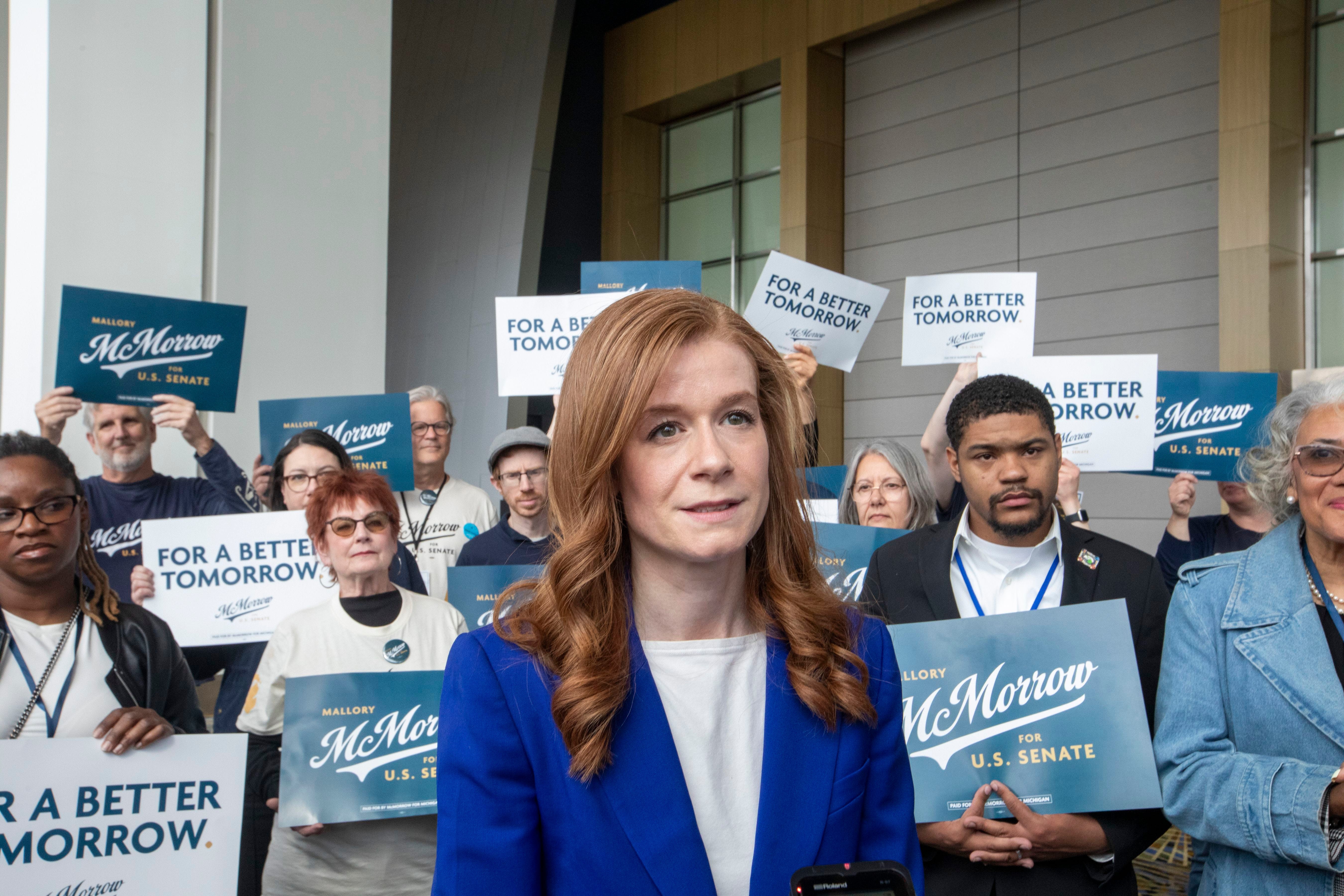
Wedgewood’s polls were more prolific than Median Strategies’. They were widely picked up and circulated and were included by poll aggregators like Nate Silver and the New York Times, as well as me. Silver reports that Wedgewood appears to have been the first firm of any kind to poll the Maine Senate race after Troy Jackson was nominated in Graham Platner’s place to run against Senator Susan Collins, showing the Democrat up five points. In Michigan, perhaps the most consequential case of the firm’s impact, a June Wedgewood poll showed Abdul El-Sayed leading the Democratic Senate primary with 46 percent of the vote, Haley Stevens at 39 percent, and Mallory McMorrow — the preferred candidate in the race for many, including Matt — with a shockingly low 9 percent. McMorrow, who left the race less than two weeks after the poll was published, argued on Tuesday that the poll directly harmed her campaign.
“Donations dried up. Volunteers were devastated and pleading for guidance on what to do. Reporters hounded me with calls to drop out,” McMorrow wrote on X. “Sure, a point was proven. Polling is broken. But tens of thousands of people poured their hearts, time, energy, hard-earned money into something they believed in — for a year and a half, and it was treated like a game.”
But the gatekeepers partly worked. While the New York Times did include Wedgewood’s polls, it did not include polls from Median Strategies. The reason we know about Wedgewood’s fraudulence is because FiftyPlusOne (which, separately, declined to add Median because, it said, the firm wouldn’t answer basic methodological questions) investigated Wedgewood’s reliability. When Silver removed Wedgewood from his model, he wrote that the forecasts barely changed, signaling that the firm’s fabricated numbers did not have a large impact on our big-picture understanding of the landscape.
So why is that cold comfort?
Authority is cheap; trust is expensive
The authority-building features of polls, such as data, specific margins of error, and attribution, are cheap to fake. The trust-building mechanisms of creating a track record and a transparent method that has been checked are time-consuming, expensive to produce, and invisible to most consumers.
And a poll’s impact doesn’t depend on its legitimacy. For donors weighing a campaign’s viability, staffers adjusting messaging, and voters evaluating candidates, polls and the conversations surrounding them are weathervanes. Maybe a campaign concludes that a poll is bad, but that doesn’t keep it from spreading like wildfire across Reddit and X or from sucking away the momentum that campaigns run on. Polls are rarely debunkable, unlike other forms of misinformation, so they often just sit there as data points people use to make what they believe are educated decisions.
This fake poll phenomenon isn’t new. Strategic Vision and Research 2000 faked polls years ago, with Silver suggesting in 2009 that the former was fraudulent and researchers — and Silver — concluding the same about the latter a year later. Research 2000 conducted polls for local newspapers and blogs. Notably, those fake pollsters were caught by people with statistical expertise operating in the blogosphere, a less traditional gatekeeper than the New York Times, and the same people are doing the same work today.
What’s changed are the incentives for creating these polls and the rapid dissemination and adoption of them via social media platforms. Producing a credible-looking fake requires very little time and very little money. Silver points to artificial intelligence as a useful tool for both creating and detecting fakes and asserts that prediction markets, where trading volumes are now high enough to make manipulating prices potentially profitable, add an incentive for fraudsters. And the effects of a fake poll are only becoming more consequential as those polls become folded into a social media ecosystem that spins them into a new kind of reality, disregarding accuracy.
What this says about trust
Taking the experiment seriously, the conclusion isn’t that people trust polls too much or too little but that the trust is badly located. The people who are, and always have been, most capable of evaluating polls are still skeptical, and the people who are least capable are persuaded by the surface, authority-building features that are easy to imitate.
Blanket cynicism about polls isn’t the answer here. That’s exactly what political actors who have been trying to discredit polls by calling real ones “fake” want. The White House often uses that language to dismiss entirely legitimate polling, adding to the erosion of trust in media, science, data, and people across the board. A public that has resigned itself to shrugging at all polls is just as exploitable as one that believes them all.
The better response, then, is to make verification more visible by disclosing sponsors, sources, sample size, dates, and modes and to trust the gatekeepers whose job it is to verify truth, who will hopefully become even more scrupulous rather than fall victim to a social media frenzy.
These fraudsters, or “experimenters,” proved their point, but they did so in the least helpful way possible. They handed ammunition to those who want to discredit polling and expertise instead of highlighting the much bigger issue here: Social media truths have displaced facts, warping the way that democracy functions, warping how voters, campaigns, and candidates make decisions.
What we are watching in the midterms:
The midterms are a little over a week away. There isn’t much to do but wait, so in the meantime I crowdsourced the office to find out what people, in their own words, will be watching.
I will be watching for which Trump voters do, or do not, vote for Democrats. I’m looking specifically at Hispanic and rural voters, who have been widely discussed as blocs that are uniquely disgruntled by the current administration. How much of the polling and vibes in these particular cases are accurate?
is watching for:
How much ticket-splitting is going to happen in NC, OH, ME, AK, and TX.
Maine’s 2nd district: This is Trump country, but Susan Collins has historically been able to win over a lot of Dem voters. Watching whether she significantly outperforms fellow Republican Paul LePage, who’s running for the House.
Ohio’s Mahoning County: Trump won this working-class county by about 9 points in 2024, but Sherrod Brown essentially tied there. Brown is running for Senate again, so I’m watching whether he can keep winning over Trump voters who otherwise vote Republican.
has a thorough list of things to watch:
Kentucky’s 6th district: Polls close early in Kentucky, so whether this battleground district flips will be a key early flag on how Democrats are doing. If they win it, the wave looks pretty big.
Virginia’s 1st: If Democrats win this, they’re in pole position for a tidal wave coming their way. It’s a wealthier, whiter seat with an entrenched incumbent against a strong challenger — if Wittman goes down, it’s a sign that they may make gains in other places like Missouri’s second.
Florida 22: If Pia Dandiya wins this Trump +11 seat, you can probably call the House early.
Texas: Everyone already knows to watch Paxton and Talarico, but Hinojosa has an underdog’s chance at winning that election on a good night. Watch the Rio Grande Valley for a sign on how Democrats are doing with low-income Hispanics. Given that the California count is going to be super slow, watching the lower-income seats along the border could give us a lot of signal for whether David Valadao can hold on.
Michigan: If El-Sayed trails by 2 at midnight, he’s probably winning that race given how late Wayne County (Detroit) drops tend to come.
Iowa: Miller-Meeks in IA-01 has been triaged by the GOP already, but watch IA-02, where Democrat Lindsey James could beat Joe Mitchell, who’s made it a point to hug Trump in this Trump +10 seat. But Trump is very unpopular in Iowa right now and Mitchell now looks like an underdog. If Democrats win here, it’s safe to say polls aren’t massively underestimating the GOP.
is looking at three things:
Pre-election DOJ shenanigans. Different kinds of thing already in California, Minnesota (Omar), Virginia (Lucas), and just today Alaska.
Do the Senate pollsters herd, even as the generic ballot stays wide for Dems (if so, I’d be suspect of any movement toward even)
How many seats do Dems win in states that are right back in cycle in 2028 (e.g. North Carolina, Iowa, Alaska, Kansas … )
: Does Ossoff win by double digits? If so, start the campaign to draft him for 28?
: If you look at NYT polling, it seems like Iowa is the closest race of the tossups. I think if we win Iowa, we're going to have a spectacular result in the Senate overall. We won't find out the results for Alaska for days (likely) and Michigan could be unknown until Wednesday, but if we've won Iowa, we can feel really good about those races, too, in my opinion.
tells me he is watching for who wins control of Congress. Thanks, Matt.